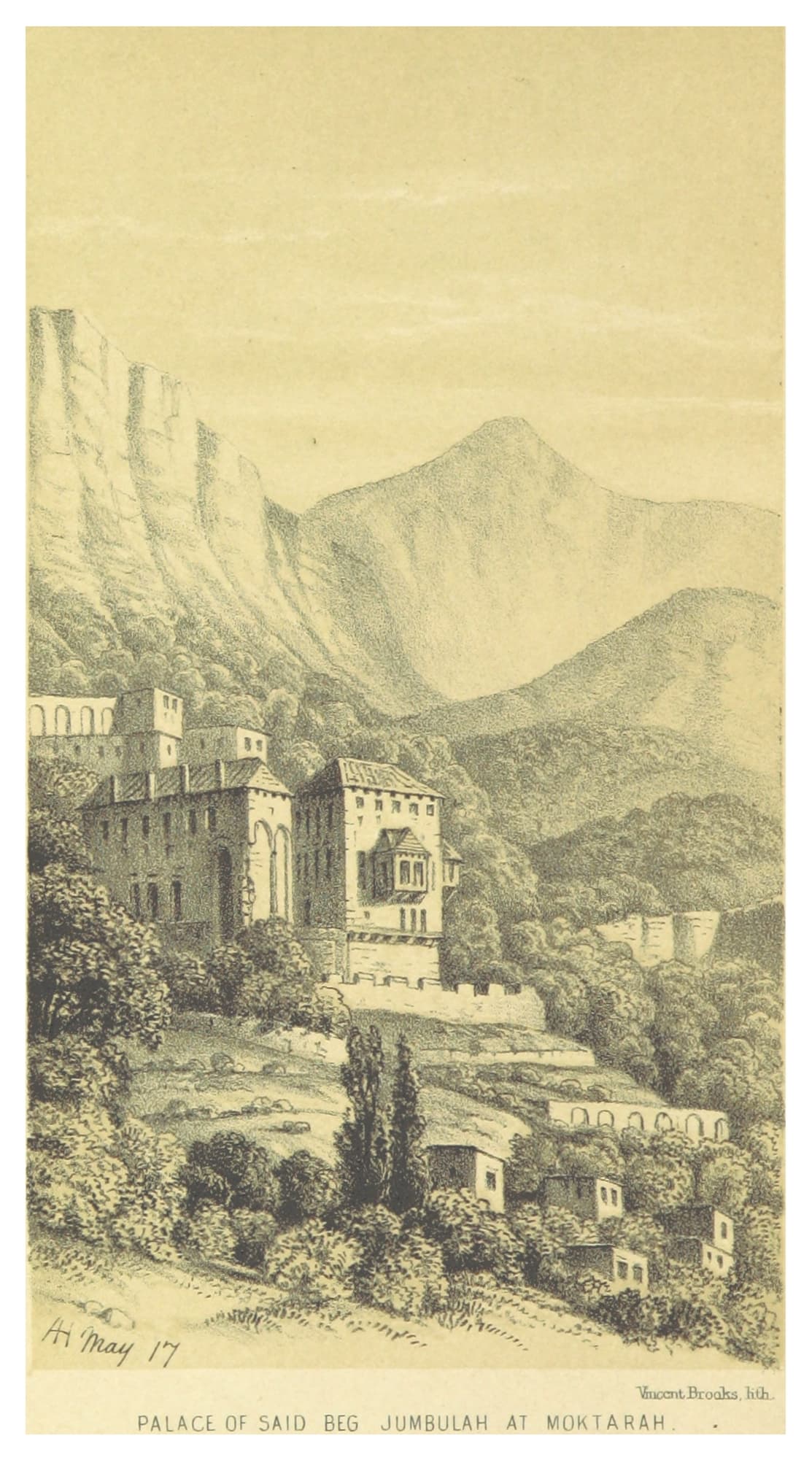
Nazira Jumblatt — known with deep respect as Sitt ('Lady') Nazira — was educated at home in several languages and married into the leadership of one of the great Druse houses. In 1921, her husband Fouad Jumblatt, the powerful chief of the Chouf, was assassinated, leaving her with a young son, Kamal, and a community in danger of spiralling into blood feud.
Rather than command revenge, she chose restraint. The family forgave the killing and refused to name those responsible, deliberately breaking the cycle of retaliation — an act of moral courage remembered to this day. In doing so she protected both her son and the peace of the mountain.
For three decades she effectively led the Jumblatt house and held sway over the Druse of Mount Lebanon. Through the turbulent years of the French Mandate she kept the Chouf stable, shielded her community from colonial reprisals, and is credited with helping ensure that the Great Syrian Revolt did not engulf Lebanon. She guarded the leadership until her son Kamal came of age to take it up himself.
So commanding was her presence that a French novelist made her the model for the heroine of a celebrated 1924 novel, and her life became the subject of a documentary, Lady of the Palace. Sitt Nazira stands as a powerful testament to the leadership of women in Druse society — a stateswoman in an age that rarely allowed one.
“She forgave the killing, refused to name the killers, and in doing so spared her people a war.”
Sources & further reading
- Wikipedia — Nazira Jumblatt
- Documentary — 'Lady of the Palace' (2003)
Aggregated from public sources. Spotted an error? Let us know.